Stop Guessing, Start Staying: A Traveler's Guide to Matching Your Personality to the Perfect Boutique Hotel
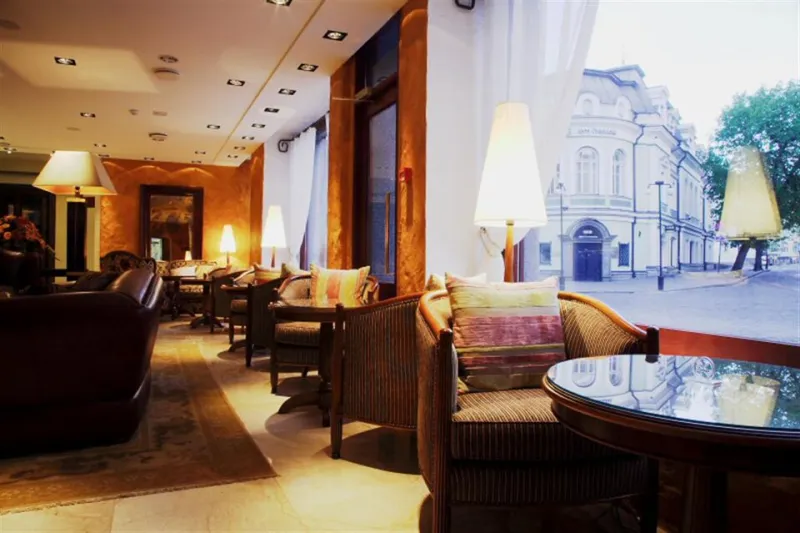
Photo: alku, CC BY 3.0, via Wikimedia Commons
Why Boutique Does Not Always Mean Better
The word "boutique" has become one of the most overused terms in the hospitality industry. Originally coined to describe small, independently operated properties with a distinct character and a high degree of personalized service, the label has since been adopted by properties that share little more than a modest room count with the original concept. For American travelers navigating the booking landscape, this linguistic inflation creates a genuine challenge: how do you identify a property that will actually deliver on the promise of authentic hospitality?
The answer begins not with the hotel, but with you.
Understanding your own travel personality — the combination of preferences, priorities, and behaviors that define how you engage with a destination — is the single most effective tool for narrowing the field. Once you know what you are genuinely looking for, the right property becomes far easier to identify, and the wrong ones reveal themselves quickly.
Step One: Identify Your Travel Personality
Most travelers fall into one of several broad categories, though many combine elements of two or more. Identifying your dominant type provides a useful starting point.
The Cultural Enthusiast travels primarily to engage with history, art, local traditions, and the daily life of a destination. This traveler values proximity to cultural sites, access to knowledgeable local staff, and programming that goes beyond surface-level tourism. They are less concerned with amenity lists and more interested in whether a property feels genuinely embedded in its community.
What to look for: Staff who are local residents and can speak authoritatively about the area's history and culture. On-site or partner programming such as cooking classes, craft workshops, or guided neighborhood walks. A design aesthetic that reflects regional heritage rather than generic contemporary styling.
The Relaxation Seeker prioritizes rest, comfort, and the deliberate absence of stimulation. For this traveler, the ideal stay involves minimal planning, a comfortable and quiet environment, and the freedom to move at whatever pace the day dictates.
What to look for: Properties that emphasize calm — thoughtfully designed spaces, attentive but unobtrusive service, and amenities oriented toward restoration, such as garden areas, reading rooms, or wellness offerings. Avoid properties that heavily promote nightlife adjacency or high-energy programming.
The Adventure Traveler uses accommodation primarily as a base of operations, prioritizing location and logistical support for active exploration. Comfort matters, but it is secondary to access and practicality.
What to look for: Properties with strong local partnerships for guided excursions, secure storage for gear, flexible meal timing, and staff experienced in advising on outdoor or active pursuits in the area. Early check-in and late check-out flexibility can also be critical.
The Social Connector travels to meet people — other guests, local residents, hospitality staff — and values environments that facilitate organic interaction. This traveler thrives in communal spaces and appreciates properties with a strong sense of community.
What to look for: Shared dining experiences, communal lounges designed for conversation, and a hospitality team that actively facilitates introductions between guests with shared interests.
The Questions You Should Always Ask
Once you have identified your travel type, the next step is vetting properties through direct inquiry. A phone call or personalized email to a boutique hotel reveals far more than any booking platform profile, and the quality of the response itself is diagnostic.
Ask about staff tenure. High turnover at a boutique property undermines the very quality that distinguishes it from a chain. A property where staff members have worked for several years is one where relationships — with the community, with returning guests, with local vendors — have had time to develop.
Ask what makes the property specific to its location. A genuinely place-rooted boutique hotel should be able to answer this question with enthusiasm and specificity. A vague response about "local inspiration" warrants skepticism.
Ask how the property handles special requests. The answer reveals the depth of the personalized service model. A property committed to authentic hospitality will describe a process; a property that merely markets the concept will offer reassurances without substance.
Ask who owns and operates the property. Independent ownership is not a guarantee of quality, but it is a strong indicator of the kind of personal investment that distinguishes genuine boutique hospitality from a branded approximation.
Red Flags Worth Knowing
Certain signals, once recognized, reliably indicate a mismatch between a property's marketing and its actual character.
- Stock photography that could belong to any hotel. A property with genuine character will showcase that character in its visual presentation. Generic imagery suggests a generic experience.
- Amenity lists that read like chain hotel brochures. Boutique properties distinguish themselves through specificity and personality, not through the length of their amenity lists.
- Reviews that are uniformly brief and non-specific. Authentic stays generate detailed, personal accounts. A pattern of short, unspecific reviews may indicate that guests did not find the experience memorable enough to describe at length.
- No evidence of local partnerships or community engagement. A property genuinely embedded in its community will have visible relationships with local businesses, artisans, or cultural institutions.
How Authentic Hospitality Differs From Luxury
This distinction deserves careful attention, because it is one that confuses many travelers. Luxury hospitality, at its finest, delivers an impeccably executed, highly standardized experience of comfort and service. Every detail is refined; every expectation is met or exceeded. It is an extraordinary achievement, but it is not the same as authentic hospitality.
Authentic hospitality introduces an element of genuine human relationship that luxury, by its very nature, cannot fully replicate. It is the front desk associate who remembers that you mentioned your daughter's birthday and leaves a small local sweet on the pillow. It is the housekeeper who, noticing a travel book on your nightstand, leaves a handwritten note suggesting a lesser-known site she loves. These moments are not engineered; they emerge from a culture of genuine care.
At Shree Sai Hotel, the distinction is not merely philosophical. It shapes every hiring decision, every training conversation, and every interaction between staff and guest. The goal is not perfection in the abstract — it is meaning in the particular.
Making the Final Decision
Armed with clarity about your travel personality, a set of targeted questions, and an understanding of the red flags to avoid, you are well positioned to make a choice that will genuinely serve your experience. The boutique hotel landscape, for all its complexity, rewards the traveler who approaches it with intention.
Book the property that answers your questions with specificity, reflects its location with authenticity, and demonstrates through its culture — not merely its marketing — that it understands the difference between hosting and welcoming. That difference, once experienced, is not easily forgotten.