The Quiet Revolution: How Boutique Hotels Are Designing Spaces Where Solitude Feels Like a Gift
Not every traveler arrives seeking a crowded rooftop bar or a packed schedule of curated group experiences. For a growing segment of American travelers — solo adventurers, self-described introverts, and those prioritizing mental wellness above all else — the ideal hotel stay looks quite different: unhurried mornings in a well-designed room, a corner of the library where no one will interrupt, a staff member who offers a warm recommendation without launching into an extended conversation.
This is not antisocial behavior. It is a sophisticated and increasingly mainstream form of travel, one that boutique hotels are uniquely positioned to serve. And the most perceptive independent properties are not simply accommodating this preference — they are building their entire identity around it.
Understanding the Introvert Traveler
The terms "introvert" and "solo traveler" are not synonymous, though they frequently overlap. An introvert is not necessarily someone who dislikes human contact; rather, they are someone who finds sustained social interaction energetically costly and who replenishes through time spent alone or in quiet environments. A solo traveler may be deeply extroverted, simply choosing to journey independently. What unites many guests in this emerging demographic is a shared desire for hospitality that does not presuppose a constant appetite for engagement.
Across the United States, this traveler profile is becoming more visible and more economically significant. The solo travel market has grown steadily over the past decade, with American women in particular driving a surge in independent travel. Simultaneously, post-pandemic cultural conversations about mental health, burnout, and the restorative value of intentional solitude have elevated the concept of the "restorative retreat" from niche wellness trend to mainstream aspiration.
Boutique hotels, with their smaller scale and capacity for genuine personalization, are responding in ways that large chains — bound by standardized service protocols and high-volume operational demands — structurally cannot.
Designing for Stillness: The Architecture of Quiet
The physical environment of a hotel communicates volumes about who it believes its guests to be. Lobbies dominated by communal high-tops and ambient music calibrated for social energy send a clear signal: this is a place for gathering. Boutique properties catering to the introvert traveler are making different choices.
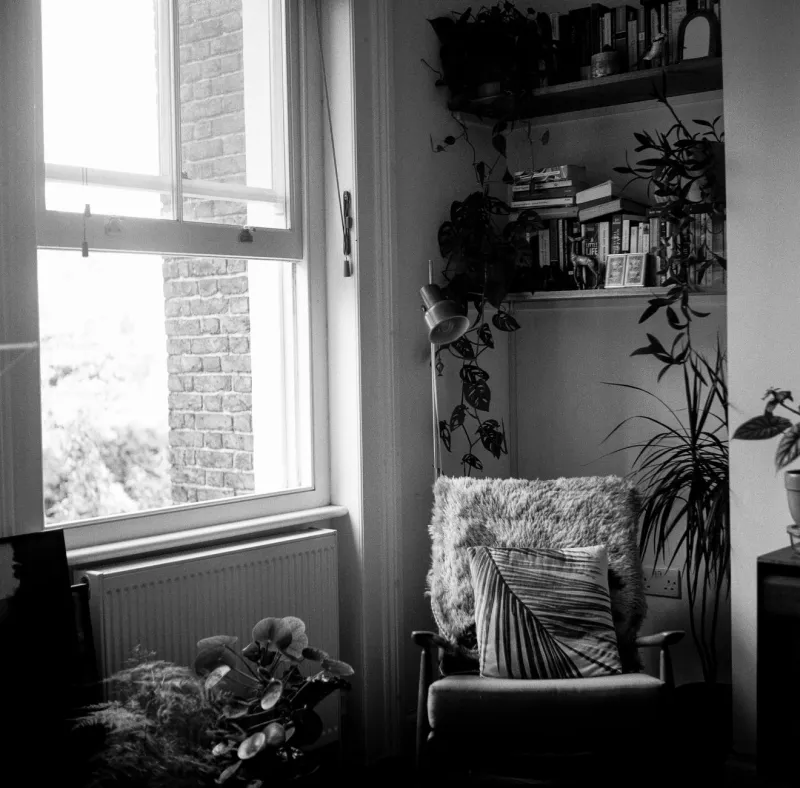
Quiet zones — designated areas within common spaces where conversation is discouraged and devices are kept on silent — are appearing in boutique properties from New England to the Pacific Northwest. These spaces, often outfitted with deep armchairs, individual reading lamps, and carefully curated bookshelves, offer guests the rare gift of public solitude: the ability to exist in a shared space without the social obligation of interaction.
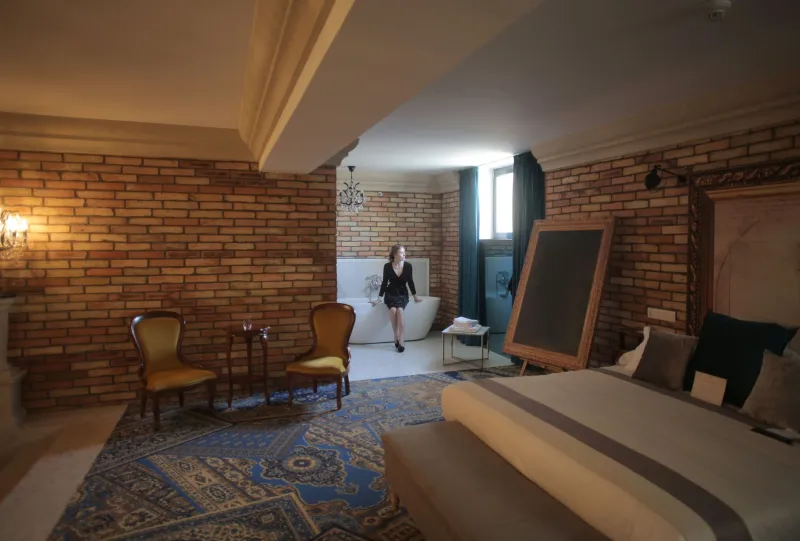
Room design is equally intentional. Rather than orienting every element toward the window view or the in-room entertainment system, properties focused on the restorative guest are creating rooms that feel genuinely livable — spaces with a dedicated reading nook, a writing desk positioned away from the bed, and lighting systems that allow for the gradual dimming that supports natural wind-down. The message is consistent: your room is not merely a place to sleep. It is a refuge.
The Art of the Well-Timed Absence
One of the most counterintuitive insights emerging from boutique hospitality is this: for the introvert traveler, exceptional service often looks like knowing when not to appear.
This requires a sophisticated calibration on the part of hotel staff. The traditional hospitality impulse — to check in frequently, to anticipate needs before they are expressed, to maintain a visible presence — can feel overwhelming to a guest who has specifically chosen a quieter mode of travel. The skill lies in remaining available without being intrusive.
Some boutique properties have introduced what might be described as "ambient service" — a model in which staff are trained to read environmental and behavioral cues rather than following a fixed schedule of check-ins. A guest who settles into a library chair with a book and headphones has communicated something. A guest who lingers near the front desk, glancing around, has communicated something entirely different. Responding appropriately to these signals is a form of hospitality intelligence that is difficult to train for in the abstract but invaluable in practice.
Digital tools are also playing a role. In-app messaging systems that allow guests to make requests, ask questions, or signal preferences without initiating a face-to-face conversation have been embraced enthusiastically by introvert travelers. These tools do not replace human connection — they make it available on the guest's terms.
Meaningful Connection, Chosen Rather Than Assumed
It would be a mischaracterization to suggest that the introvert traveler desires no human interaction at all. What they seek is connection that is genuine, unhurried, and initiated by choice rather than social obligation.
Boutique hotels are well-suited to provide this. A staff member who takes the time to offer a thoughtful, specific restaurant recommendation — one calibrated to a solo diner who prefers a quiet corner and an interesting menu rather than a trendy scene — provides real value without demanding anything in return. A morning greeting that is warm but brief honors the guest's autonomy. A handwritten note that acknowledges a guest's interests without requiring a response creates a sense of being seen without the pressure of reciprocal engagement.
This is the essence of hospitality at its most refined: the ability to offer genuine care in a form that the recipient can actually receive.
Mental Wellness and the New Definition of Luxury
The broader cultural context for this trend is impossible to ignore. American travelers, particularly those in the millennial and Gen Z cohorts, are increasingly vocal about the relationship between travel and mental health. The notion that a vacation must be packed with activity to be worthwhile is giving way to a more nuanced understanding: that rest, reflection, and intentional solitude are not failures of ambition but expressions of self-knowledge.
For boutique hotels rooted in traditions of genuine hospitality — where the guest's comfort and wellbeing are treated as sacred responsibilities — this cultural moment is a natural alignment. At Shree Sai Hotel, the philosophy has always been that true hospitality meets the guest where they are, not where convention assumes they should be.
The quiet traveler has always existed. What is changing is that the hospitality industry is finally learning to listen.