Authenticity Over Amenities: What the Rise of Boutique Hotels Reveals About How Young Americans Define Exceptional Travel
For much of the twentieth century, the aspirational hotel stay in America was legible and largely consistent: a recognizable brand name on the facade, a loyalty program accumulating points toward future rewards, a standardized room that promised the same experience whether you were in Dallas or Denver or downtown Chicago. Predictability was the product. Familiarity was the luxury.
That model still commands considerable market share. But among American travelers between the ages of roughly twenty-five and forty-two — the millennial cohort — and the Gen Z travelers beginning to enter the market with their own spending power and distinct sensibilities, something notably different is happening. These guests are increasingly choosing independent boutique hotels over the recognizable names their parents trusted implicitly. And their reasons for doing so reveal a generational renegotiation of what travel is actually for.
The Authenticity Imperative
If there is a single word that captures the value driving younger travelers toward boutique properties, it is authenticity. But authenticity is a word that risks becoming meaningless through overuse, so it is worth being precise about what these travelers actually mean when they invoke it.
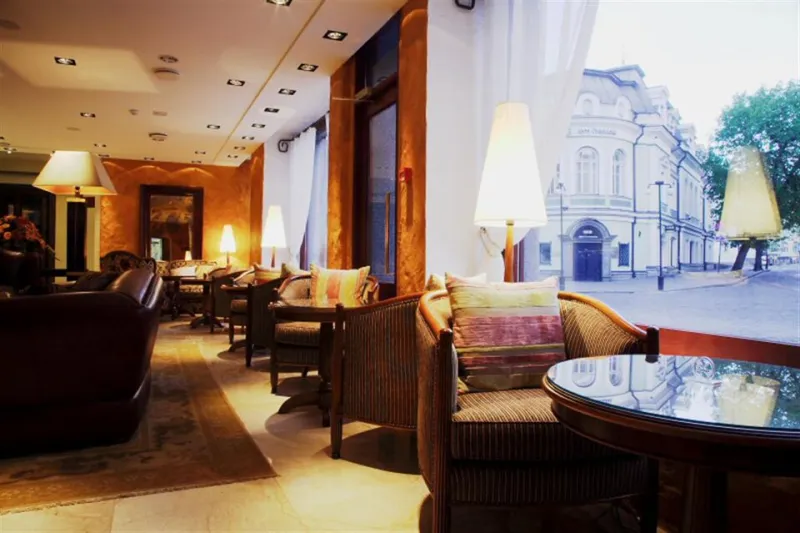
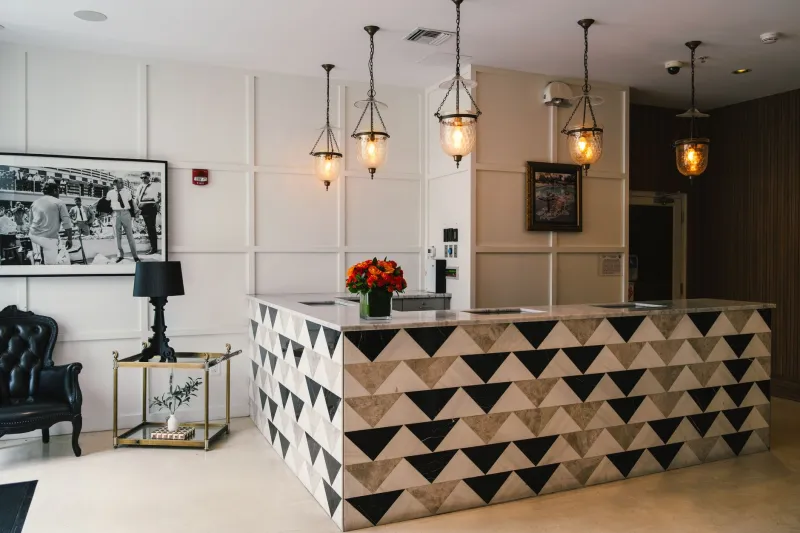
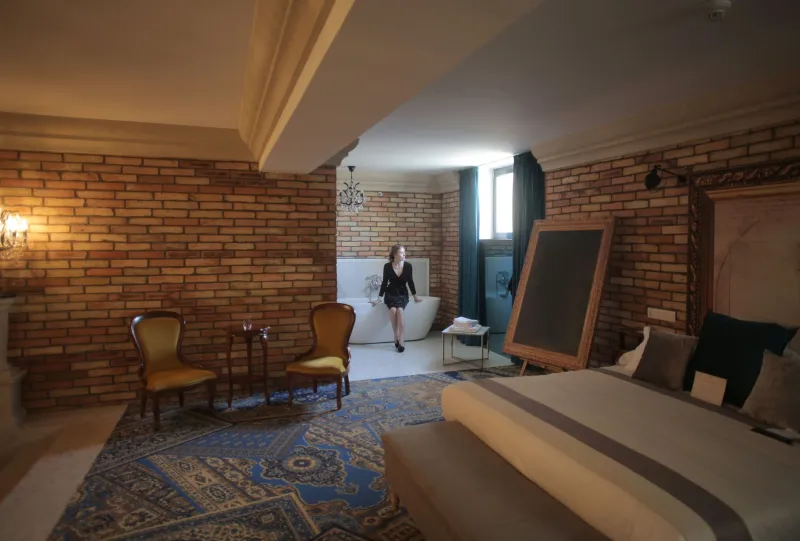
For millennial and Gen Z travelers, an authentic hotel experience is one that is genuinely rooted in a specific place and cultural context — one that could not be replicated, property for property, in another city or another country. It is a stay in which the art on the walls was created by local artists, the food on the breakfast menu reflects regional culinary traditions, the staff has personal knowledge of the surrounding neighborhood, and the building itself carries a history that predates the current hospitality operation.
This is precisely what independent boutique hotels offer and what large chains, by the structural demands of scalable standardization, cannot. A boutique property in Savannah, Georgia, occupying a restored antebellum townhouse, or a family-owned inn in Santa Fe drawing on Pueblo architectural traditions, offers an experience that is irreducibly specific. It cannot be franchised. It cannot be templated. It is what it is because of where it is and who built it.
For travelers who have grown up in a media environment saturated with manufactured experience and algorithmic curation, that specificity carries genuine emotional weight.
The Values Alignment: Sustainability and Local Ownership
Authenticity alone does not fully explain the generational shift. Younger travelers are also making explicit ethical calculations about where they spend their money — and independent boutique hotels frequently align more closely with their values than large corporate chains.
Sustainability is a primary concern. Millennial and Gen Z travelers are significantly more likely than their predecessors to research a property's environmental practices before booking. Boutique hotels, often operating at smaller scale and with deeper community roots, tend to have more flexibility to implement meaningful sustainability measures: sourcing food from regional farms, eliminating single-use plastics, investing in energy-efficient infrastructure, and engaging in genuine carbon-offset programs rather than performative gestures.
Local ownership is an equally potent consideration. When a traveler books a stay at a family-owned boutique hotel, they understand — even if only intuitively — that their spending has a different economic impact than a reservation at a property whose profits flow to a publicly traded hospitality corporation headquartered in another state. The money stays closer to the community. The ownership has a stake in the neighborhood's wellbeing that extends beyond quarterly earnings reports.
This is not an abstract political position for most younger travelers. It is a practical expression of values that extends across their consumer behavior, from the coffee shops they patronize to the clothing brands they support.
Narrative-Driven Experience and the Social Currency of Story
There is another dimension to this shift that is worth examining honestly: the role of social media and the premium younger travelers place on experiences that generate compelling narratives.
A stay at a boutique hotel in a converted historic mill, or a night in a property whose design was conceived by a celebrated local architect, or a morning spent in a courtyard garden that has been tended by the same family for three generations — these are stories worth telling. They differentiate the traveler as someone with discernment and curiosity, someone who seeks out the particular rather than defaulting to the generic.
This dynamic is sometimes characterized dismissively as mere Instagram performance. But that reading is too reductive. The desire to have experiences worth sharing is not new — it is as old as travel itself. What has changed is the medium through which those experiences are communicated and the degree to which the experience economy has matured to serve that desire explicitly.
Boutique hotels understand this. Many of them are, in effect, curated environments designed to be discovered and shared. The difference is that the best of them earn that attention through genuine quality rather than manufactured aesthetics.
Redefining Luxury for a New Generation
Perhaps the most consequential implication of this generational shift is what it reveals about the evolving definition of luxury in American travel culture. For the generation that came of age watching their parents' financial security evaporate in the 2008 recession — and who then navigated a global pandemic in early adulthood — the traditional markers of luxury carry less weight than they once did.
Thread count and marble bathroom fixtures are not irrelevant. But they are table stakes, not differentiators. What younger travelers increasingly define as luxurious is time: the unhurried breakfast with a staff member who genuinely knows the neighborhood. The room designed with enough thought to make an evening in feel like a genuine choice rather than a default. The sense that the property was built for people who care about where they are, not simply for people who can afford to be there.
This is a definition of luxury rooted in meaning rather than material — and it happens to align quite naturally with the philosophy that has always animated the finest traditions of hospitality across cultures. At Shree Sai Hotel, the conviction that a guest's experience should be genuinely enriching rather than merely comfortable is not a marketing position. It is a foundational belief.
Younger American travelers are arriving, in larger numbers, at the same conclusion. The hospitality industry would do well to take them seriously.
What This Means for the Future of Travel
The shift toward boutique properties among millennial and Gen Z travelers is not a passing preference. It reflects a durable reorientation of values — one that is already reshaping investment patterns, development priorities, and service philosophies across the hospitality industry.
Large chains are taking note. Many are investing in boutique sub-brands or acquiring independent properties in an attempt to capture the authenticity premium without sacrificing scale. Whether those efforts can succeed without compromising the very qualities that make boutique hospitality compelling remains an open and genuinely interesting question.
What is clear is that the travelers defining the next era of American hospitality know what they want — and they are increasingly confident in their ability to find it.