What Your Ears Know Before Your Eyes Do: The Overlooked Acoustics of a Truly Welcoming Arrival
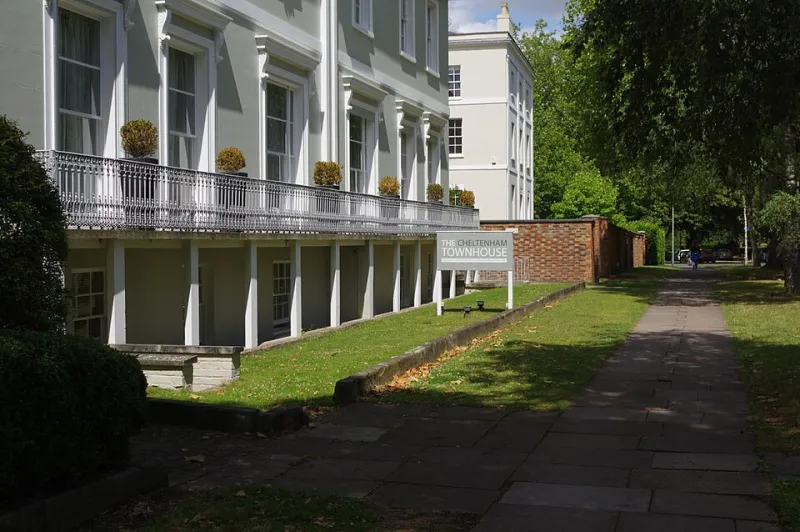
Photo: Stephen McKay, CC BY-SA 2.0, via Wikimedia Commons
Close your eyes and recall the finest hotel stay of your life. Chances are, you cannot summon the exact shade of the bedspread or the precise dimensions of the room. But you can almost certainly hear it — the muffled hush of a hallway, a distant fountain, the particular silence of a building that has stood for a century.
Sound is hospitality's most neglected craft, and its most powerful.
The Auditory First Impression
Neuroscientists have long established that the brain processes auditory information faster than visual detail. Within seconds of crossing a threshold, a guest's nervous system has already rendered a verdict: safe or on guard, welcome or processed. Large hotel chains understand this at a corporate level — which is precisely why so many lobbies sound identical. Televisions murmuring cable news, the mechanical churn of revolving doors, the scripted cadence of a call center greeting: these are the acoustics of throughput.
Boutique properties operate on a different frequency, literally. The absence of lobby television is not an oversight; it is a statement. What fills that silence instead is rarely accidental.
Designing What Guests Are Not Meant to Notice
Consider the details that small hoteliers obsess over, often at considerable expense:
- Flooring as instrument. A wide-plank oak floor creaks in a way that laminate never will. That creak signals age, permanence, and care — a building with a biography rather than a build date.
- Water as white noise with a soul. A courtyard fountain does more than decorate. It masks street traffic, softens conversations, and establishes a rhythm slower than the one guests arrived with.
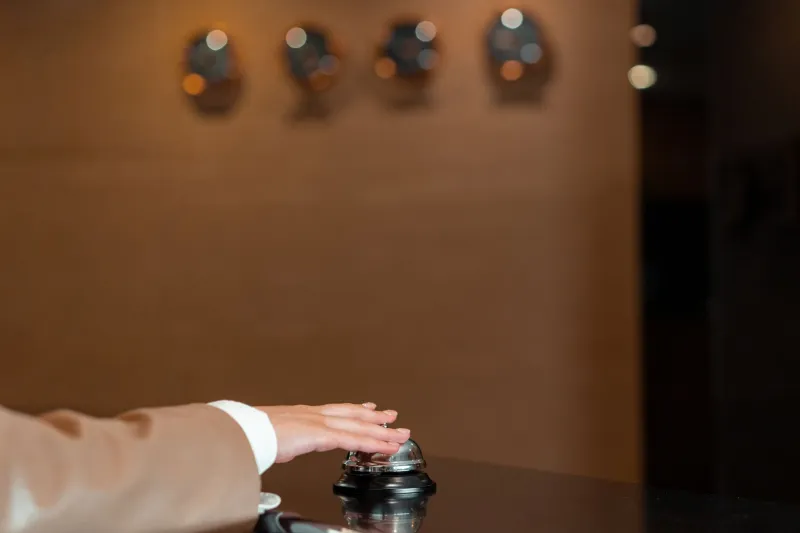
- The volume of the welcome. At a front desk staffed by people who know the building intimately, greetings tend to be quieter, unhurried. There is no headset, no barked room number. The tone itself communicates that no one is being rushed.
- Doors that close like doors. Solid wood with a brass latch produces a sound of finality and privacy that hollow-core doors cannot imitate. Guests hear it once and relax.
None of these elements appears on an amenity list. All of them shape the stay.
Why Memory Keeps the Soundtrack
Travel researchers have observed that guests describe exceptional stays in sensory, not spatial, terms. Nobody reminisces about room 214. They reminisce about how the morning sounded — roosters, rain on a tin roof, the clink of dishes drifting up from a dining room below.
This is especially true for American travelers arriving from environments engineered for noise: open-plan offices, highway commutes, notifications layered over notifications. A hotel that sounds different from home is performing a kind of restoration that no pillow menu can match.
Listening as a Travel Skill
Travelers can train themselves to evaluate a property by ear. Upon arrival, pause for thirty seconds before checking in. Listen for the following:
- Is there a television running in a shared space? If so, ask yourself who it serves — the guest, or the habit of the operator.
- Can you hear mechanical systems humming, or does the building breathe naturally?
- Does the staff speak at a conversational volume, or project as though performing for a crowd?
- What is the loudest sound in the building? In a well-designed small hotel, it should be something alive — laughter, cutlery, birdsong — not something manufactured.
The answers will tell you more about the quality of your prospective stay than any photograph.
The Quiet Standard
At its heart, this is a matter of intention. Any property can install a fountain. Fewer can articulate why. The hoteliers who design for the ear — who treat silence as a resource to be protected and ambient sound as an ingredient to be chosen — are the ones whose properties guests describe, years later, as places that simply felt right.
That feeling has a sound. The best hotels have simply learned not to interrupt it.