The Unlikely Meeting Place: How Boutique Hotels Are Rebuilding Human Connection One Shared Table at a Time

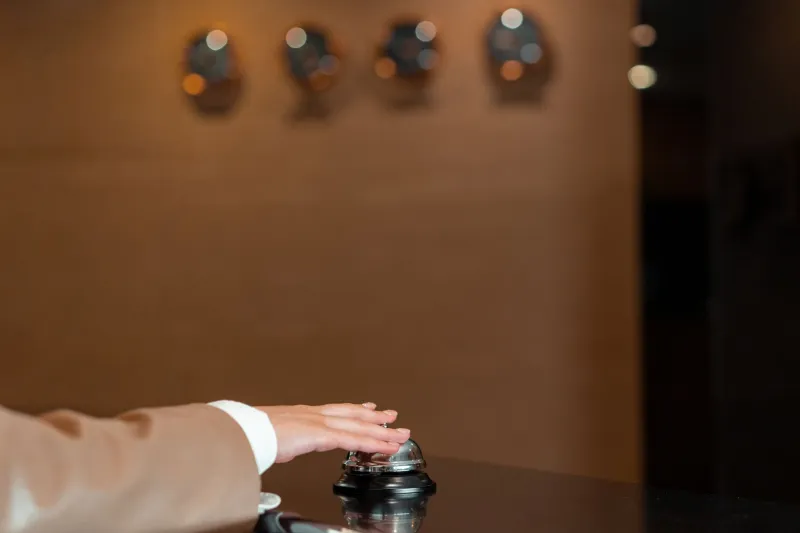
Photo by Photo by Romain Gal on Unsplash on Unsplash
The United States Surgeon General's 2023 advisory on loneliness arrived with the weight of official alarm: roughly half of American adults reported measurable levels of social isolation, with consequences for physical and mental health comparable to smoking fifteen cigarettes a day. The advisory prompted the expected wave of commentary about social media, remote work, and the erosion of third places — the coffee shops, barbershops, and community centers where Americans once gathered without agenda.
What the commentary largely missed was a quieter trend unfolding in hotel lobbies, at communal breakfast tables, and around fire pits in the courtyards of boutique properties across the country. In the very places travelers go to escape their ordinary lives, something socially remarkable has been happening. Strangers have been talking to one another. And then meeting again for dinner. And, in a surprising number of cases, staying in touch long after checkout.
Boutique hotels, it turns out, may be among the most effective third places left in America.
Why Size Determines Social Possibility
The mathematics of human connection are unforgiving. Above a certain scale, a hotel stops being a place where guests interact and becomes a place where they coexist. When a property has four hundred rooms, the lobby functions as a transit corridor. Faces are unfamiliar, stays are brief, and the social calculus of approaching a stranger feels risky in a way that it simply does not in a smaller, more intimate environment.
Boutique hotels — typically defined as properties with fewer than one hundred rooms, though the spirit of the designation matters more than the number — operate at a scale where recognition becomes possible. When the same twelve guests appear at breakfast three mornings in a row, faces become familiar. Familiar faces invite greeting. Greetings, in the right environment, become conversation.
This dynamic is well understood by boutique hoteliers who have thought carefully about their role. "We're not running a convention center," explained the owner of a sixteen-room inn in Vermont's Northeast Kingdom. "We're running something closer to a house party where the guests don't know each other yet. Our job is to make the introductions."
The Architecture of Accidental Encounter
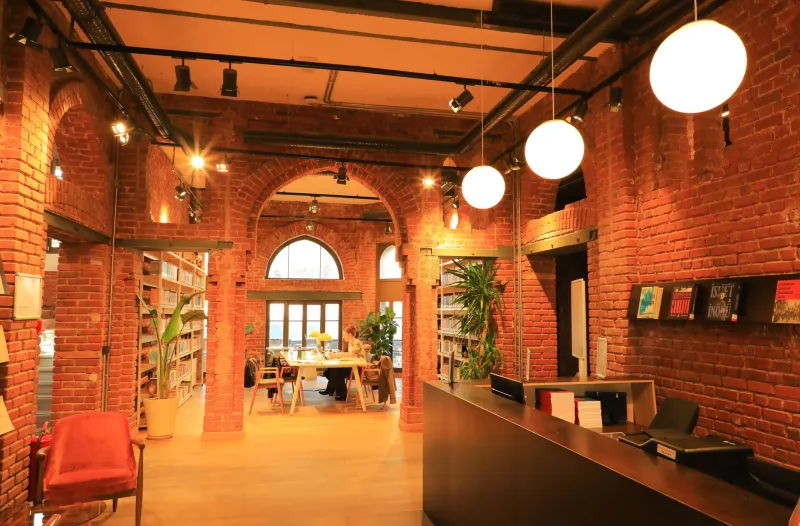
The most socially successful boutique properties are designed around what hospitality architects call "collision points" — spaces and features that make unplanned interaction not just possible but nearly inevitable. A single communal coffee station in the morning. A library with only one comfortable armchair grouping. A wine hour that takes place in a room too small for anyone to stand alone without appearing antisocial.
These are not accidents. They are deliberate spatial decisions made in full awareness of human behavioral tendencies. People who would never approach a stranger in a hotel corridor will share a laugh over a malfunctioning French press. A couple examining a hand-drawn map on a lobby wall will accept a recommendation from the fellow guest who spent three days exploring the same region last summer.
The physical layout of communal dining spaces is particularly consequential. Long farm tables that seat eight to ten guests simultaneously, rather than clusters of two-tops that face outward toward windows, send an unmistakable social signal: this is a place where you are expected to share the experience of eating with whoever sits beside you. Travelers who choose boutique properties tend to accept — and often welcome — this expectation. They arrived, after all, seeking something different from the anonymous efficiency of a chain hotel dining room.
Curated Programming as Social Catalyst
Beyond architecture, the most socially dynamic boutique properties have developed programming specifically designed to give guests a reason to gather. The range of approaches is wide, but the underlying logic is consistent: shared activity dissolves the awkwardness of introduction more effectively than any amount of well-designed furniture.
A boutique inn in coastal Maine hosts a weekly lobster bake on its dock that is open to all current guests — an event that has, over the years, produced documented friendships, at least two marriages, and one business partnership that the parties involved still credit to the property's owner. A small hotel in Marfa, Texas, offers evening stargazing sessions led by a local astronomer; guests who would never have spoken across a restaurant table stand shoulder to shoulder in the dark, heads tilted toward the same sky, and find that conversation arrives without effort.
The common thread in these events is not entertainment value but shared vulnerability. When people are simultaneously new to an experience, the social hierarchy that governs ordinary life softens. No one is an expert. Everyone is a little uncertain. In that uncertainty, connection becomes possible.
Real Stories From Shared Spaces
The evidence for boutique hotels as social anchors is not purely anecdotal, though the anecdotes are often the most compelling part of the story. A retired schoolteacher from Portland, Oregon, described meeting her closest travel companion at a boutique inn in Savannah, Georgia — a woman she had initially hesitated to greet because she seemed absorbed in a novel. "The owner sat us at the same table for the welcome dinner," she recalled. "Within twenty minutes we had compared notes on six countries. We've taken four trips together since then."
A solo traveler who stayed at a small property in the Hudson Valley described the communal fire pit as the place where he had, over three evenings, spoken more honestly about his life than he had in months of therapy. "There's something about talking to people you'll never see again in your regular life," he said. "The stakes feel different. You say things you actually mean."
What Larger Hotels Cannot Replicate
Chain properties have, in recent years, made visible efforts to create communal spaces — co-working lobbies, rooftop bars, curated local programming. These efforts are genuine, and some are well-executed. But they consistently fail to produce the quality of connection that smaller boutique properties generate almost organically, and the reason is not difficult to identify.
Connection requires continuity. It requires seeing the same face twice, remembering a name, following up on a story that was left unfinished at breakfast. In a property with three hundred rooms and a turnover rate calibrated to maximize occupancy, this continuity is structurally impossible. Staff cannot know every guest. Guests cannot know each other. The social fabric simply cannot form at that scale and speed.
Boutique properties, by contrast, operate at the pace of actual human relationship-building. Staff remember not just names but preferences, histories, and the small details that make a person feel genuinely seen. And when staff model that quality of attention, guests tend to offer it to one another as well.
A Philosophy, Not a Feature
At Shree Sai Hotel, the conviction that hospitality is fundamentally a social act — that the quality of a stay is measured not only in comfort but in the quality of human encounter it facilitates — shapes everything from room configuration to the timing of evening programming. Authentic hospitality has never been a solitary experience. It has always been, at its best, an invitation to be briefly but genuinely part of something larger than yourself.
In an age that has made isolation easier than ever before, that invitation is worth more than it may appear.