First Impressions, Lasting Memories: The Intentional Rituals That Define a Boutique Hotel Welcome
There is a moment — brief, almost imperceptible — between stepping through a hotel's entrance and settling into the rhythm of a new place. For most travelers, that moment passes without much thought. But for the hospitality designers, owners, and cultural curators behind the world's most thoughtful boutique properties, those first fifteen minutes represent the most consequential window of an entire stay.
At Shree Sai Hotel, we believe that a welcome is never merely procedural. It is a declaration of intent — a signal to the guest that they have arrived somewhere that genuinely cares about their presence. That conviction is shared by a growing number of independent hoteliers across the United States and abroad who are reimagining check-in not as a transaction to be completed, but as an experience to be remembered.
The Sensory Architecture of Arrival
Before a single word is spoken, the body has already begun forming an impression. Hospitality designers refer to this as the "sensory threshold" — the layered combination of light, sound, scent, and texture that greets a guest the moment they enter a space.
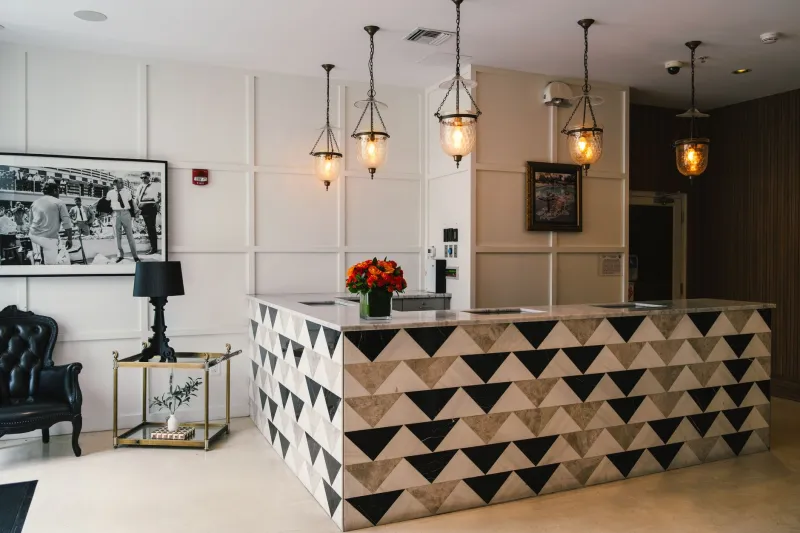
Leading boutique properties invest considerable attention in this invisible welcome. Warm, diffused lighting replaces the harsh overhead fluorescence common in chain hotels. Curated soundscapes — perhaps soft regional music or the quiet ambient sounds of a courtyard garden — replace the indifferent hum of commercial HVAC systems. Signature scents, developed in collaboration with perfumers and often inspired by the local landscape or cultural heritage of the destination, drift through lobbies in a way that is present without being intrusive.
These choices are not decorative afterthoughts. They are deliberate compositions, designed to lower a traveler's cortisol levels, signal safety, and communicate character. When a guest inhales sandalwood and warm spice upon entering a property rooted in South Asian hospitality traditions, they are receiving information about the hotel's identity long before any staff member has said a word.
The Human Element: Greetings That Go Beyond the Script
For all the sophistication of sensory design, no element of arrival is more powerful than the human greeting. At the most thoughtful boutique hotels, this moment is treated with extraordinary care.
Rather than defaulting to a rote sequence of identification requests and credit card authorizations, front-of-house teams at independent properties are increasingly trained to lead with genuine curiosity. A well-placed question — "Was this your first time visiting the area, or are you returning to somewhere you love?" — accomplishes several things simultaneously. It communicates attentiveness, it gathers information that can be used to personalize the stay, and it signals to the guest that they are being seen as an individual rather than processed as a reservation number.
Hospitality trainers who work with boutique properties often describe this approach as "conversational intelligence" — the ability to read a guest's emotional state upon arrival and calibrate the welcome accordingly. A traveler who has just endured a six-hour flight delay needs something different from one who has arrived refreshed and eager to explore. Skilled front-desk professionals learn to recognize these cues and respond with empathy rather than formula.
Personalization as a Form of Respect
The most memorable arrivals are those in which a guest discovers that the hotel already knows something meaningful about them. This is not surveillance — it is attentiveness. When a returning guest finds their preferred pillow firmness already arranged, or when a first-time visitor receives a handwritten note acknowledging a special occasion mentioned during booking, the effect is profound.
Boutique hotels have a structural advantage over large chains in this regard. Smaller guest rosters mean that staff can genuinely learn and remember individual preferences. A family traveling with young children might find a small basket of age-appropriate activities waiting in their room. A solo traveler arriving late might receive a warm suggestion for a quiet corner of the hotel's restaurant rather than a bustling bar recommendation.
These gestures require no elaborate technology — only a culture of attentiveness and a genuine commitment to treating each guest as a distinct human being with specific needs and desires.
The Ritual of the Guided Orientation
Another dimension of arrival that boutique hotels are reclaiming is the physical orientation — the brief, unhurried walk through the property that acquaints a new guest with their temporary home. Where chain hotels often hand over a key card and point toward an elevator, thoughtful independent properties treat this moment as an opportunity for genuine hospitality.
A guided orientation, done well, does more than convey practical information. It communicates pride of place. When a staff member pauses in a corridor to explain the origin of a piece of art on the wall, or mentions that the herbs in the lobby arrangement were grown in the hotel's own garden, they are inviting the guest into the story of the property. That invitation transforms a visitor into a participant.
At properties that draw on rich cultural traditions — including those inspired by the legendary hospitality of South Asian guest culture, where the arrival of a guest is considered a sacred occasion — this orientation can take on an almost ceremonial quality. The act of welcoming someone into a space is treated not as a duty to be discharged, but as a privilege to be honored.
Why the First Fifteen Minutes Matter More Than Any Amenity
Research in the field of hospitality psychology consistently demonstrates that guests' overall satisfaction with a stay is disproportionately influenced by their arrival experience. A guest who feels genuinely welcomed in those first fifteen minutes is more forgiving of minor inconveniences throughout their stay, more likely to engage positively with staff, and significantly more likely to return — and to recommend the property to others.
This is the deeper logic behind the investment that boutique hotels make in the art of arrival. It is not simply about creating a pleasant first impression. It is about establishing an emotional contract with the guest — a promise that the care and attention they experienced in those opening moments will persist throughout their time at the property.
At Shree Sai Hotel, that promise is not incidental to what we do. It is the foundation upon which every other element of hospitality rests. The first fifteen minutes of a stay are not a prelude to the experience. They are the experience, distilled to its most essential form: one human being extending genuine welcome to another.