Where Your Reservation Actually Goes: The Real Economic Story Behind Choosing a Boutique Hotel
The decision of where to stay on a trip is, for most American travelers, made primarily on the basis of price, location, and reviews. These are entirely reasonable criteria. But there is a fourth consideration that receives far less attention, despite being arguably more consequential: what happens to the money after you pay it?
This is not a rhetorical question. The economic geography of hospitality spending — where dollars go once they leave a guest's credit card — varies dramatically depending on the type of property involved. And for travelers who care about the communities they visit, understanding this geography is one of the most practical tools available.
The Leakage Problem in Large-Scale Hospitality
Economists who study tourism have a term for the portion of travel spending that exits a local economy before it can do any meaningful work there: leakage. In the context of large resort chains, leakage rates can be striking. A significant share of revenue generated at a major chain property flows outward — to corporate headquarters in another state or country, to centralized purchasing agreements with national suppliers, to marketing departments and loyalty program infrastructure that exist entirely outside the destination.
The United Nations Environment Programme has estimated that in some developing tourism markets, leakage from large international hotel chains can account for as much as eighty percent of tourism revenue. While the figure varies considerably in domestic US markets, the underlying dynamic holds: the larger and more centralized the hospitality operation, the smaller the proportion of guest spending that circulates within the local community.
Boutique hotels, by contrast, tend to operate with a fundamentally different economic footprint.
Following the Dollars at an Independent Property
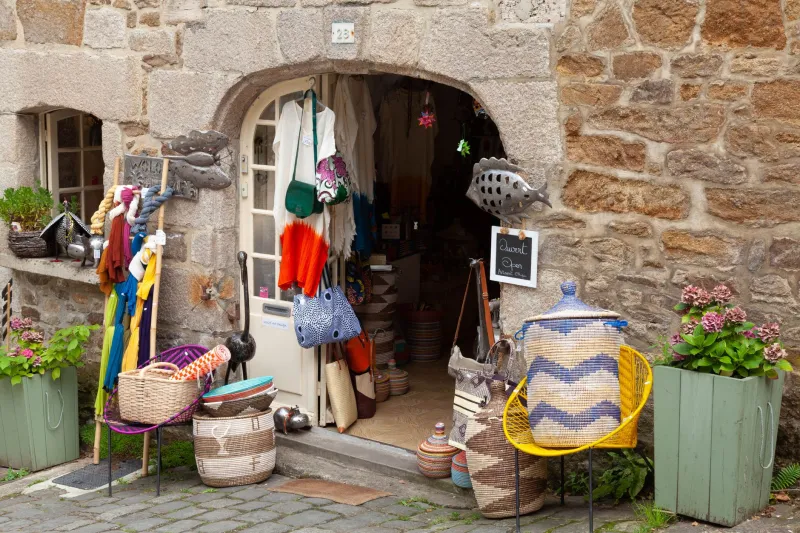
Consider what happens when a traveler books a room at a genuinely independent boutique hotel — one that sources its breakfast ingredients from a regional farm, employs local staff at competitive wages, commissions art from neighborhood artists, and partners with small cultural organizations for guest programming.
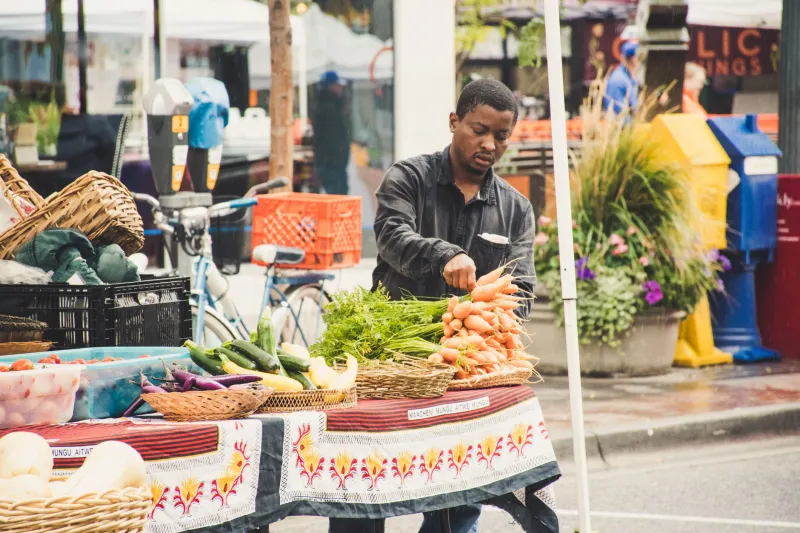
The room rate, rather than being routed to a distant corporate entity, is largely retained within the local economy. The farmer who supplies the eggs for breakfast receives a regular order. The ceramicist whose work lines the shelves of the lobby gains visibility and income. The cultural guide who leads guests on a neighborhood walk earns a living wage doing work that also preserves community knowledge.
This is not idealism. It is the ordinary consequence of a business model built around local sourcing and community investment. And it is reproducible — provided the traveler knows how to identify properties that are actually operating this way, rather than simply describing themselves as locally rooted.
A Framework for Evaluating Genuine Community Investment
For travelers committed to making accommodation choices that support the communities they visit, the following framework offers a practical starting point.
Ask about the supply chain. A property genuinely invested in its community will be able to tell you, specifically, where its food comes from, who made the textiles in your room, and which local businesses it actively directs guests toward. Vague references to "local sourcing" or "community partnerships" without specific names and details are worth scrutinizing.
Look at the staff. Are the people working at the property members of the surrounding community? Are they paid fairly? Boutique hotels that genuinely support local economies tend to employ from within the neighborhood and to offer wages and working conditions that reflect genuine respect for their team.
Examine the cultural programming. Properties that offer guest experiences rooted in authentic local culture — cooking classes taught by neighborhood residents, guided walks with community historians, evenings featuring local musicians — are circulating both dollars and attention in ways that benefit the destination. Be cautious of programming that performs cultural identity without compensating the people who carry it.
Research ownership. An independently owned boutique hotel, particularly one with deep ties to the destination, is more likely to reinvest its revenue locally than a property that presents as boutique while operating under a larger corporate structure. Ownership transparency is worth investigating before you book.
Cultural Preservation as a Business Model
Some of the most compelling examples of community-invested boutique hospitality involve properties that have made cultural preservation an explicit part of their operating philosophy. These are hotels that understand the destination's heritage not as a backdrop for Instagram photographs but as something living, fragile, and worth sustaining.
In the American Southwest, several independent properties have partnered with Indigenous cultural organizations to ensure that the traditions featured in their guest programming are presented with the involvement and consent of the communities those traditions belong to. In New Orleans, boutique hotels rooted in the city's Creole heritage have created employment pipelines for local musicians, culinary artists, and craftspeople who might otherwise find their livelihoods squeezed by the pressures of mass tourism.
At Shree Sai Hotel, the commitment to authentic hospitality extends into this territory naturally. A property that takes its cultural identity seriously — that understands itself as a steward of place rather than simply an occupant of it — tends to make business decisions that reflect that responsibility. The overnight stay becomes, in this context, a form of participation in something larger than the transaction itself.
Empowering the Conscious Traveler
None of this requires travelers to sacrifice comfort or convenience. The most community-invested boutique properties are, frequently, also among the most memorable places to stay — precisely because they are animated by a genuine relationship with the world around them.
What it does require is a slightly different approach to the booking process. Rather than defaulting to the first result returned by a major travel aggregator, the conscious traveler might spend an additional thirty minutes researching the ownership, sourcing practices, and community relationships of a prospective property. The questions are not complicated: Who owns this hotel? Where does the food come from? What does this property do for the people who live here year-round?
The answers, when they are honest and specific, tell you more about a hotel than any star rating ever could. And the choice to stay somewhere that can answer those questions well is, in the most literal sense, a vote for the kind of travel — and the kind of world — worth preserving.